I don’t know what your life is like at the moment, and if it’s anything like mine, you might need a bit of a retreat at the moment… a moment of calm to help reset, restore, and respond to whatever your heart wants to say to you.
I’m deep in the second week of an impromptu personal retreat. Impromptu? I guess I could have seen it coming… If nothing else, this year has been an amazing opportunity for letting go. This time, no loved ones passing (fingers crossed), but my lack of clarity over who I am best to serve right now has caused a stagnation so big, that it was either keep pouring love and passion into murky waters… or pause. Retreat. Ground into the heart. Sit and listen.
One fun thing to report, I decided to go digital-free, and the first day I watched my mind reorient back to a non-digital-partnered mind. That was wacky. I hadn’t realized how different my thought patterns are when I’m connected to the internet vs when I’m not. It’s like fasting and noticing how much I think about food, except that this is deeper in that not only do I think about it, but the pattern and rhythm of my thoughts actually change. Crazy.
The rest of the time has been a lot of depth work. Along with my normal daily trail runs, I’ve quite a bit of meditating and healing. And oddly, a lot of napping. Lots and lots of napping. That’s gotten fun… for about 24 hours, my system even went into a pattern of 4-hour sleep cycles… 4 hours asleep, 4 hours awake, 4 hours asleep, 4 hours awake. Amazing. It created so much time disorientation, that afterwards I couldn’t remember when I’d done things. Did I do that yesterday morning? Or at night? All of the usual internal time markers were gone.
I’m sharing my retreat adventures with you in part to say that change is afoot. I’m really not sure what direction my work is going to go as a result of all of this healing. I absolutely love working with the clients that I have. What’s not clear yet is who the next ones are going to be. I have to get more clear (inside) before I can invite them in. And while these periods of big transition are not all rainbows and unicorns (heh), I always come out the other side so much better that I’ve learned to love them.
I can imagine that you do, too.
If you’re feeling the call to do some deep listening of your own, I hope that you give yourself some time to do just that. And as you know, the best retreat, practice, fitness routine, health plan, insert-healthy-thing-here, is the one you’ll actually do.
As adults, one of our biggest challenges, are the painful unconscious patterns that we run. On a daily basis, we can find ourselves in the middle of doing things that we really wish we weren’t. One handy thing to do is to pause and interrupt them right there in the middle.
Here are 2 simple ones I played with yesterday.
Pause When Waking Up
In the morning, when you’re waking up and your consciousness is dropping back into your body, what’s the first thing your mind does? If you’re like me, your mind leaps straight into planning what you’re going to do today.
Great. Seems useful.
Except that yesterday morning, as I launched into that habit, I paused for a moment and checked in, “Why am I doing this? I’m not even fully awake yet!” I realized that I was planning my whole day without seeing how I was feeling first. I was making a whole list of decisions without knowing what I was ready for… I was planning my day with a sense of urgency, and no sense of self awareness.
Wow. Ok. Then I realized that I railroad myself into tasks like this every morning. Goodness.
Why? What need am I filling here? And is there something better I can do to fill it? (These are great questions to ask when working with any pattern, especially challenging addictions like blame/shame, smoking, etc. We do them for good reasons, so we need to understand what those are in order to fill the needs with something healthier)
An unconscious pattern unfolded for me… I realized I wasn’t feeling good in my body, which is true most mornings because I generally wake up feeling tired, and instead of laying there in the “ughhhhhh,” I start reaching for what I’m going to do today. That way I avoid focusing on how bad I feel. The need here is to feel better!
This was really helpful. It allowed me to take a few minutes to stretch and breathe and improve my overall sense of wellbeing, so I started the day feeling great versus rushed.
So, the question for you is, what do you do as you’re waking up? This is an excellent moment to pause, notice if you’re running any unconscious patterns that aren’t so helpful, and ask, “What’s the need here?”
Pause When Reaching For A Distraction
This is a big one for most of us. The first one got me thinking about patterns, and not long after a really obvious pattern popped up: distracting myself with food. Some people like to distract themselves with social media (I join them at night!). During the work day, I like to distract myself with snacks.
So the first time I got up from my desk to go get a little something, I paused and asked, “Why am I doing this? What need am I filling here?”
I realized, yet again, that I didn’t feel good. Eating or drinking something tasty was a way to feel better. So then it was, ok, what are some ways I can feel better? Well, what’s the source of the bad feeling? Am I bored? No. (If yes, how can I make this task more fun?) Stressed by what I’m working on? No. (If yes, how can I bring some ease into this task?) Am I upset, scared or otherwise emotionally uncomfortable? No. (If yes, how can I help myself calm down?) Turns out, I really needed some water! LOL. I’m sure it’s often one of the other reasons, so I’ll keep doing this today and see how it goes.
Pause Tips
In order to pause before we launch an unconscious pattern, we need to bring some conscious decision making into the mix. How to be conscious of something we’re not conscious of? Great question.
The usual way to do this is with visual cues like ribbons, sticky notes or notebooks.
If you want to play with pausing in the morning, put something next to your bed like a ribbon on your bedside lamp or a sticky note on the wall that you’ll see as you open your eyes. Use that to remind you to pause and check-in before you launch. Alternately, a notebook on your bedside table as a reminder has the added advantage that you can write down your reflections each morning, plus any dreams you want to record.
If you want to play with pausing before you reach for a distraction, put a ribbon on it: on your tea cup, the refrigerator, your phone, your cigarettes, etc.. Let the ribbon or sticky note remind you to pause and check-in. What do I need right now? Again, a notebook as reminder has the added function of providing a place to track the what’s happening overall. What tasks or situations or times of day inspire you to reach for distraction? What are the needs? What helps quench them? And as you see the patterns, how can you tweak your day to make tasks and rest more satisfying (so you’re not wanting to distract in the first place).
Ninja Level Bonus: Pause When Angry
This one needs little explanation, though it’s challenging to do! As you can imagine, when you’re feeling angry, you can pause in the middle of that and check-in: what am I needing here?
Anger can be really helpful, as it’s gives us a lot of powerful energy in the moment. Sometimes, that’s really useful, like when you need to get out of harms way. The rest of the time, we’re often reacting to some past hurt… hello unconscious painful pattern. Patterns that involve anger can be really destructive, especially if we direct that powerful energy at someone else or ourselves. This is a great time to do a pattern interrupt.
How to do this one? When you notice that you’re angry, it’s actually easier to hit pause via the body than the mind. There’s a simple thing you can do which is to start lengthening your exhale. As soon as you notice you’re angry (Congratulations! You’ve just gotten more conscious!), invite the next exhale to be a little longer and just notice the response. Keep inviting and noticing in this fairly passive way, and watch your nervous system calm down from whatever fight or flight response was triggered. This passive focus allows the body to calm down at it’s own speed, without feeling pressured, and works better for me than trying to force it.
This one is not so easy, and yet, it’s a great way to play with pausing painful patterns.
If you have any suggestions for this one, or you have a different way to gently interrupt your anger, I would love to know!
Have a wonderful day, and enjoy playing with the pause.,
…that goes something like: the things you despise in your enemies are the things you despise yourself. Or, the things you most dislike about others are the things that you most dislike about yourself. In other words, “Hello, projection.”
Take a breath here, and ground into some safety, because you’re going to need to be comfortable in order to drink this in deeply enough to make a difference.
A lovely soul of 80 years asked me last week if felt like it was ever too late to start a relationship?
My answer was surprising perhaps. An unequivocal, “Yes!”
And perhaps, less surprising, was my reasoning, “Once we’re dead.” At that point I imagine we go back to being whatever we are when we’re not separate selves… Probably relationships (and marathons) are not a thing when we’re not in material bodies and are more clear about being One. So, once we’re disembodied, now it’s too late.
But before that? Well, now my answer is what you’d expect me to say, except that my reasoning for that has been delightfully surprising my friends for years. It goes a little something like this…
There’s always time…
Even to the last breath, we can fall more deeply in love with ourselves and the people around us. Maybe completing the marathon will be a little more challenging, but you can in that instant at least open to the possibility.
So far pretty normal.
The secrect sauce is in the mindset, the belief, the feeling, the knowing that you still can.
How to do that? Simple. Ditch the cultural mindset that aging equals degradation.
Still not delightful you say?
Ahhh… Let me tell you a story.
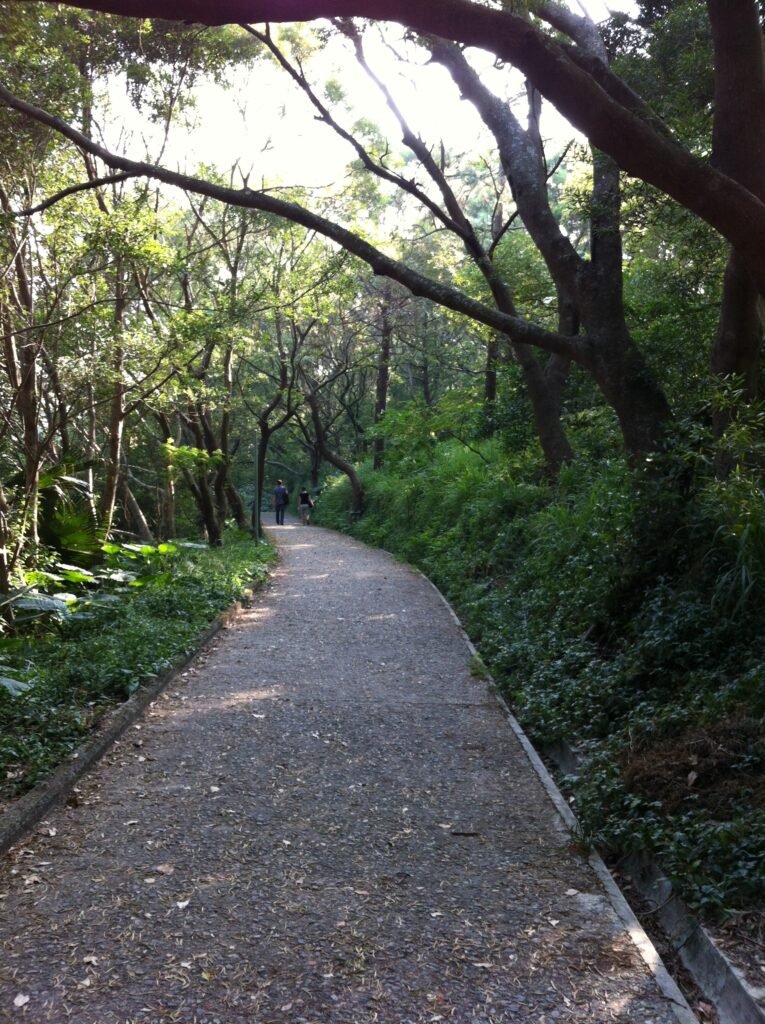
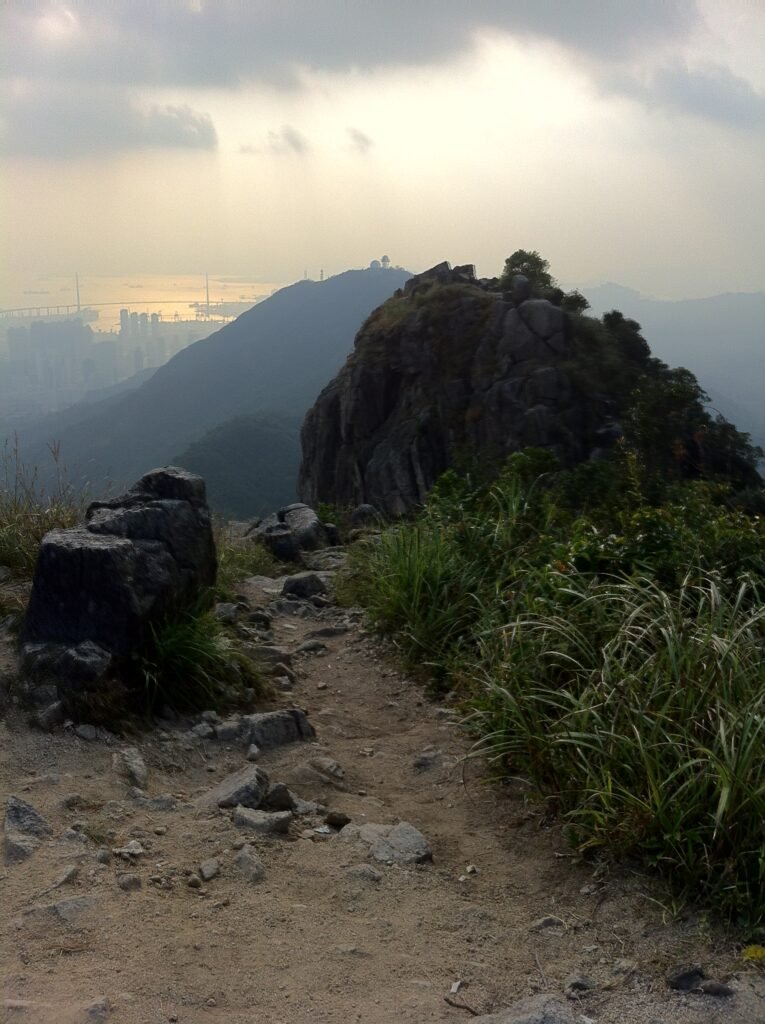
At the oh, so tender age of 43, I was running along a tree lined park high up in urban hills of Hong Kong, and a thought occurred to me, “I wonder if I could run a second marathon and beat my time? I wonder if I could cut 20 minutes off my time and run it in less than 5h30 minutes?!” So far so good.
What happened next literally stopped me in my tracks. The thought that innocently followed was, “Oh, no. I’m too old to run a marathon. All that training, I’ll be way too old in a year to run that far.”
Instantly, followed by, “What the…?!!!” I still remember stopping mid-stride, and thinking, “How rediculous! Where the hell did that idea even come from?!” I mean here I am running! I’m doing the thing that some part of me has decided I won’t be able to do a year from now because I’ll be to old… against all evidence to the contrary. I’m literally doing it! And had been for years! “What the hell is this?”
I was shocked.
I’m sure the couple walking towards me, who started whispering to each other nervously, edging around, and delicately giving as much birth as possible, thought I was totally bonkers. I’m sure I looked crazy, standing there one leg dangling, with this horrified, sweaty red face… LOL. Thinking about it, I probably yelled out an explicative or two. I was clearly acting unstable. Heh. Too bad this experience was a little less illuminating for them. “Crazy foreigners,” was all they got out of it. I digress. “Old age, my foot!,” I grimised.
The thought had been so real, so believable and so obviously not true that the dissonance was striking. Where was this belief coming from? Why did I think that I was getting to old to run?
Foot still dangling mid-air, this was all happening in a matter of seconds, I realized that cultural conditioning around aging was kicking in. The ideas about getting old that I’d mindlessly absorbed my entire life were now starting to ripen with age.
“Shit.” I put my foot down. This was not on!
“If at 43 I’m already deciding that at 44 I’m not going to be able to run, this needs to be nipped in the bud!” I sifted through my thoughts about getting old and realized that what the whole idea rested on for me was death at 90. This meant that everything could be tracked back from there… middle age at 45! and everything downhill after that. Or, apparently for me, at 44. As usual, I was getting an early start. Great.
I started running again to contemplate further. This was a perfect thought stream to run with. “Ok, what if I just move the goal post, the end date? If all of my pre-concieved ideas are about kicking the bucket at 90, why not decide to croak at 100 instead? Or, oh! how about 150?!!“
150! That would be fun! That would stretch the whole thing out, move all of the goal posts and challange all of those pesky notions of middle age and eventual decrepitude. I started doing the math… middle age at 75. 75! I had 33 more years! Sweet! I could deinitely run another marathon! Yay!
I started running a bit faster, a spring back in my step. This was a great idea! I could already tell that challenging these cultural ideas was going to change what I believed I was capable of… I could look at new projects with the belief that I had time. I could start anything I wanted. I was still capable of learning, growing, getting more fit, doing more… of everything!
I was amazed at how much lighter I felt. I think I actually bounded in the air like Tigger for a few strides. This was exciting.
And then an even more extraordinary thought occurred. One that stopped me in my tracks, again. “If living to 150 is so effective at challenging my unconscious, internalized beliefs about aging, what if I go for an even bigger goal… one that I’d be even more excited to achieve, one that feels totally inspiring?! What if I decide to live as long at the Daoist masters say we can live and go for 250?!! This is crazy enought to work! I love this!!”
Now I really started running. Numbers wizzing through my head… planted at 250 = middle age at… 125!
“Holy cow. 125!!! That’s nuts!
At 43, I’m the equivalant of… a teenager! Ha! This is great!”
This put an even bigger spring in my step. I decided to do it. I decided that I had nothing to lose and everything to gain. I decided to change my internalized belief from pushing up daisy at 90 to popping my clogs at 250. “Why not?”
This was quite the run. It started out as a run-of-the-mill jog and had taken me from an early decline to a long life span. In fact this one run has altered the course of my life forever. Perhaps for the following 207 years!
Ok, ok, I can hear your mind saying, “That’s a nice story, Elena, and I am much more reasonable than you are and this will not work for me. I will not lie to myself and try to believe that I’m going to live to some ridiculous age. This won’t work. I strive for authenticity and this is just silly. Cute. And, no.”
There is method to my madness…
First, this is not actually about believing that I’m going to live to 250, or 150 or any age I might choose. The point is not whether I actually live to that age at all. The point is how it changes how I live TODAY.
This idea is just like it’s corollary, carpe diem, seize the day: the idea of living today as if it might be your last. No one does that because they actually think they’re going to die tomorrow. They have no idea. They do it because of how it helps them live today.
Carpe diem is another way to achieve an ‘ageless’ mentality, but for me I don’t like the stress that I feel with that. I prefer the relaxed, carrot (vs stick) approach, of having as much time as I could possibly want. An almost unimaginable amount of time… 250 years.
Second, ultimately, living to 250 is about leaning into a very long health span. Of challenging all of those beliefs that I mindlessly absorbed about what getting older means… that I must decline and be unable to do certain things at pre-set ages. Why believe those things handed to me by a culture that isn’t in my body, and is making a whole bunch of assumptions that may or may not have anything at all to do with me? They’ve been wildly wrong about me about so far. Why swallow these mindlessly?
And ladies and gentlemen, the results are astounding…
Over the last 10 years, as those once unconscious beliefs floated to the surface, they’ve all begun to feel dissonant, worthy of being questioned and examined. Most could be scrapped instantly, like, being unable to run a marathon. Some take a bit more time.
When stiffness arrived, and I would catch myself thinking, “Ow. Getting old sucks. Now, I’m going to have to feel this stiffness in my back until I pass. Great.”
…and instead of letting that become my reality, I would notice that and think, “Really? Why am I assuming that? What if I do a bit of gentle movements right now?” Ahhhh. And voila, stiffness reduced. I might have to do those movements quite a bit over the following days, or even months, and the difference is now I know that I can do something about it. I’m no longer a victim of these ludicrous ideas.
The difference is staggering. It has really changed my life. And, of course, it’s not just fitness. It’s having time and capacity to do everything. It’s removing age as a limiting factor. Speed isn’t needed when I have 250 years. I’ve got time.
I’ve got time to improve my health, my fitness, my relationships, my business, my running times, my singing (thank goodness!), and anything else I want to do.
I ran two marathons since this delightful run in the park. I haven’t gone sub 5 hours 30 yet (arghhhh!!), but I have time if I ever want to do it again.
Regardless of how old I actually live. I might die tomorrow, or a minute from now. And, so the answer to “Is it too late?” is now and forever more (until I depart), “Go for it.”
Last month, a week after my partner left for the States, I was standing at the kitchen counter making lunch when my fingers landed on something sticky. “Gross!” Disgusted, my thoughts ran down their habitual rails, “Damn it, Benoit! Why don’t you ever clean the counter?! You don’t care about keeping the kitchen clean!” As I unstuck my fingers, a mortifying realization dawned, “Oh no! He’s been gone a week! This mess is mine!”
Cue guilt, shame… “God, why do I always blame him? He’s not even here! I can’t believe I’m so mean to him! I’m so unconscious! There must be a million things I’m not taking responsibility for! How am I ever going to fix this?!”
Relationships are an amazing opportunity for personal growth. At least mine have been, and the one I’m in now is no exception.
Why are they such potent ground for personal growth? In large part it’s because of how challenging they are. One of the huge parts of the challenge is that we’re with that person all the time. We don’t have space from them. They’re with us no matter what.
It’s the 1st anniversary of my online healing business! After 19 years mostly in person, this is a big shift. As some of you know, to celebrate, there are 11 gift sessions to give away from now till the end of September.
Give away gifts!
If you feel it, I would greatly appreciate your help giving these sessions away!
I’ve decided to focus mostly on spiritual over 40’s who want to improve their relationship with their intimate partner, feel more seen and understood, less angry and frustrated, all without re-living trauma.
I have no expectations of you (of anyone in particular), because I know that these things happen in the flow and are best when fluid and intuitive. Love works best when it is free to express… so I ask you with an open heart: if you have people in your world that you feel would benefit from a gift session, please offer them one by forwarding this, or by sharing the Gift Sessions page (https://ElenaFoucher.com/love/).
A slightly groggy happy sunny morning to you. I just landed a few hours ago…
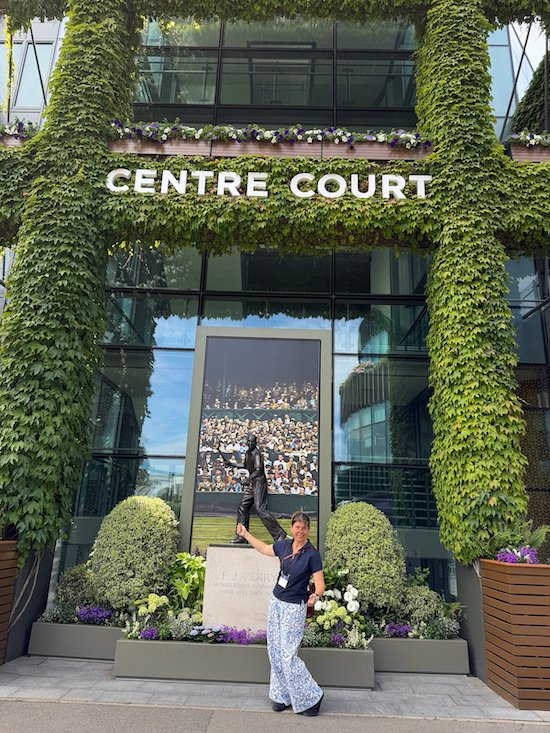
Instead of completing the Love Letter I started for you, I chose to revel in the wonderful privilege of accompanying my husband’s summer tennis coaching at the Wimbledon pre-qualifications. It was my first time there and a local friend gave me a tour of the enormous campus.
I was impressed by the understated elegance: the precisely manicured grass courts, the swathes of flowers floating in potted seas of dark green leaves, the living vertical walls with golden clocks sparkling in the sun (yes! it was sunny!), the sweeping terraces with vine covered trellises, the raised glass walkways winging their way across the skies so that the stars can get to their matches unhindered and on time…
It’s magnificent. A piece of art. An enormous verdant garden, all for enjoying the art of tennis at it’s highest levels.
What if your life purpose wasn’t preordained? What if it wasn’t determined by your inherent skills and talents, or even the ones you’ve chosen to cultivate?
What if there was no single life purpose that you needed to discover, instead it evolved as you evolve?
What if your life’s purpose was determined, not for your life, but in every moment?
…And what would that mean for you right now?
Most of us have grown up with the idea that we need to discover our life’s purpose. That purpose is supposed to help us determine once and for all, our path in life, and once we know it, whether we’re achieving it or not. It’s like our navigational north star, our rudder that keeps us sailing in the right direction, even the motivation that keeps us moving when seas get rough.
If you’re in the mood to connect with yourself, take a few quiet breaths, and let’s dive in…
I think about containers a lot, and while one of my ultimate explorations is, ‘what (kind of a container) am I?,’ I’ve just been sitting in the quiet noticing the impact of what I’m choosing to contain… what I’m inviting in, what I’m entertaining… and how that distracts me from my ability to notice my deeper self, to notice what I am underneath all of that.
Simply, I’m sitting here noticing my daily thoughts… and how they are a lot of static, a lot of interference, ultimately, just a lot of noise.