The Secret to Winning

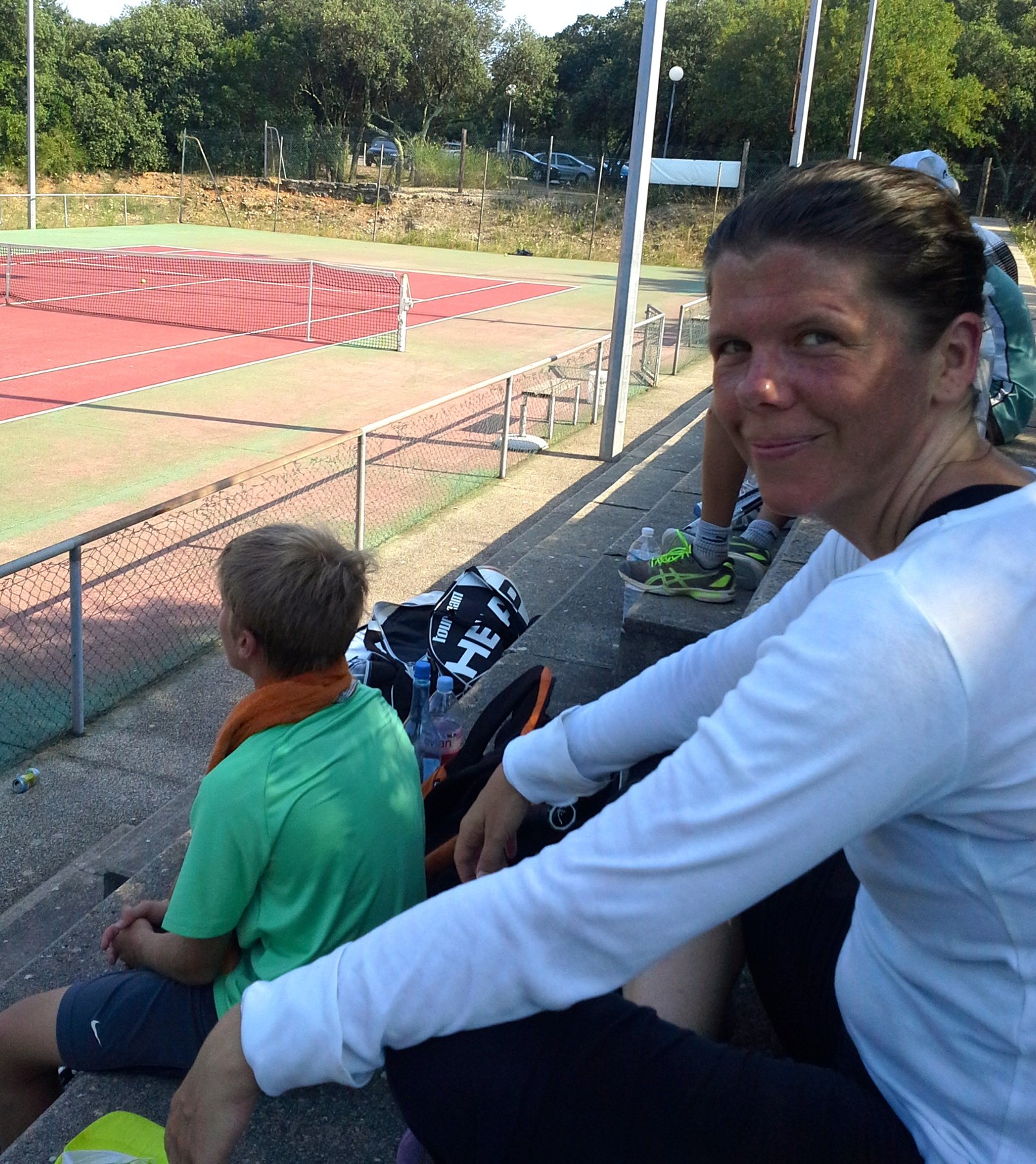
Hauts de Nimes Training

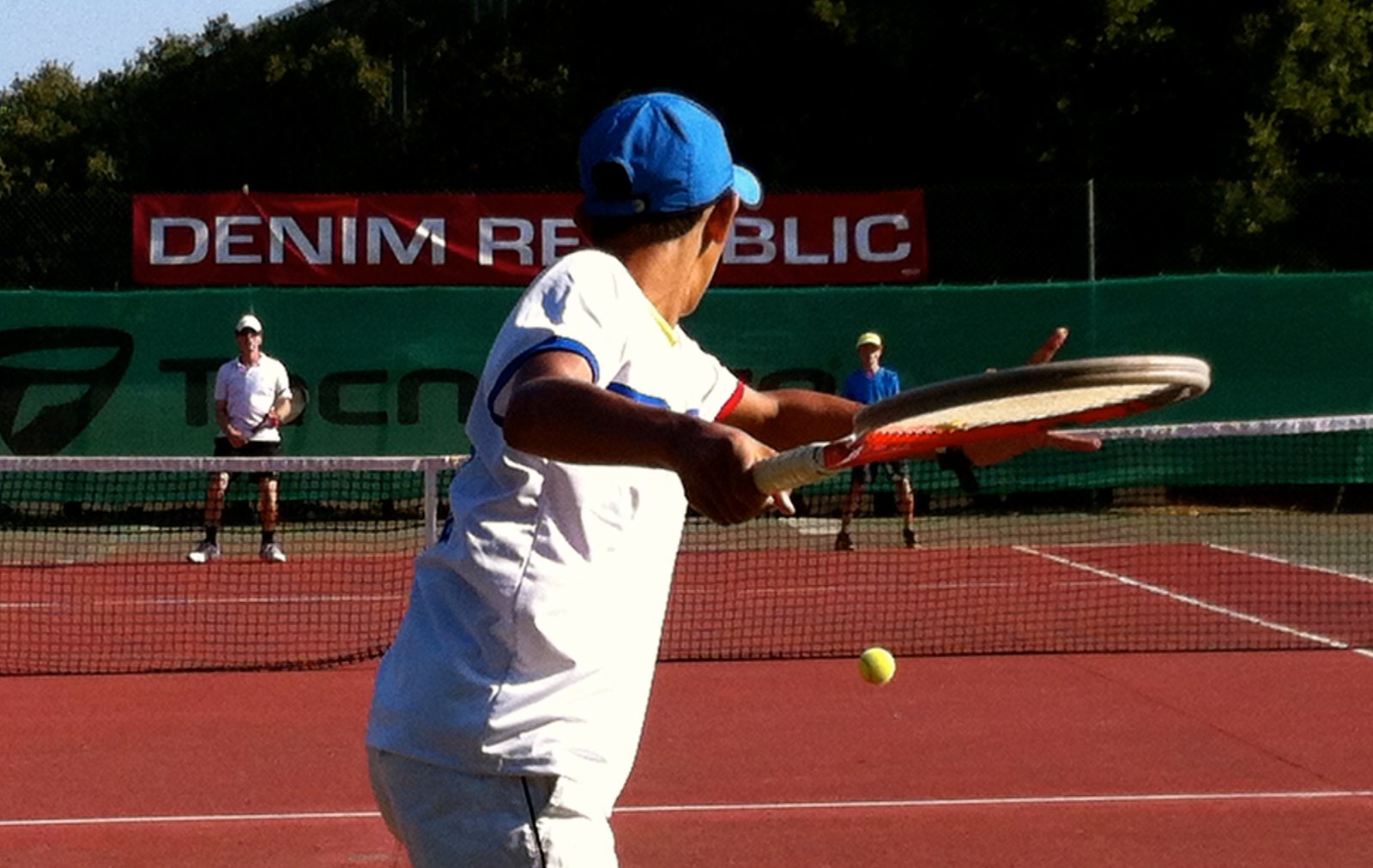
I was watching an intense professional tennis match yesterday and I realized something… that if I give up then I lose.

Simple, right?

The two athletes were really well matched, both extraordinary players. Number 1 and number 5 in the world. And one of them started winning. Really started winning. It became pretty clear, score wise that he would win the match.

And the other player kept playing. He kept playing hard, going all out our for every shot, full tilt, putting everything he had into it.

And losing.
And going full bore.
And losing.
And dedicating his entire being.
And losing.
Putting all of his focus and intensity into it.
And losing.

Point after point after point, he went for it.
And point after point after point, he lost.
And still he was there 100%.

It was amazing. If he had given up at any point, I would not have faulted him. He was clearly losing. And yet he kept playing his best, point after lost point after lost point.

He was fully motivated internally regardless of what the score was, regardless of whether he was winning or losing. Even when he was sure to lose, he kept his determination to play his best.
And he did.

And I realized that, that was a lesson to take home. Just the day before I had given up in the middle of losing every point. And I realized that that was a pattern that I could break now.

I had learned the secret.
Don’t give up.

Even when I’m losing every point, keep giving everything I’ve got.
When I’m losing is not the time to change strategies, it is time to stay determined, to stick with what I know to be right for me, even when it isn’t working in the moment. Even when I am clearly losing the match.

He won the match in the end.
And I can win in the end.

In fact I will win in that moment, long before any end, because I will be my own safe harbor, my own rock, my own measure of success… my own judge of whether I gave up too soon or persevered.

Patience, determination and belief in myself.
Especially when things seem bad.
What a beautiful lesson.

Thanks, Nadal and Djokovic, you are amazing inspirations!,

Elena

5 Giant Steps to Improve Your Heart Centered Marketing

Share You Essence

Share You Essence

For the past year, I’ve really put my nose to the grind stone to figure out how to market myself, so now I’m sharing the fruits of that labor with you…

Here they are, in 5 giant steps, my version of the current trends in heart centered marketing for soul centered businesses (healing, coaching, counseling, etc)

Synopsis

The main thing that I understand from my studies is this: marketing my work is about focusing on the client in a way that lets potentials know who I help, what I help them with and what benefits they will receive. Clients are interested in themselves first, as they should be in this equation, my work next and me third. Marketing is first about making clear to clients who I serve and how, so that they know immediately if my services could be an appropriate match for them. Once they determine if they and their issues fall into my sphere of work, then they want to know more about me. They will already have a sense of my energy from the initial information (consciously or not), afterwards I am just filling in the gaps with some details about me so that they get an even better sense. Finally, testimonials from others about their experience complete the information.

The 5 Giant Steps

1.Defining your client base – WHO are they –

Who do you work with? Who is your ideal client cohort?
Do you work with children only? Adults? Animals? Plants?  Women? Teenagers? Pregnant women?

Examples: I help men and women…, I work with young adults…, I facilitate special needs children…, I teach pet owners…

This part is often fairly difficult in part because it’s importance isn’t understood. For some excellent advice on how and why to define a niche, check out Tad Hargrave’sbrilliant work. He gets this part way better than I do, co if you are really serious, definitely read his articles!

2.Defining what you help with – WHAT do you do –

This part can also have you pulling your hair out… at least I did for years. I finally get this one, so read on…

What issues do you help with? What issues is/are the main, typical, or favorite focus(es) of your work?

Start by imagining that you have an issue that you want help with… maybe you have cancer or a torn ligament or insomnia or you are being contacted by aliens and you are terrified.  One thing to notice is that each problem is unique and that not everyone will be a suitable helper for you. In other words, if you have a torn ligament you are probably not going to go someone who specializes in channeling aliens. At least not at first. :) (Oh, this is fun.)

Does that make sense? The point is that marketing is best when it is targeted towards the client in a way that helps them understand how you can help them.

Let me say this in another way: if I am seeking help it is because I feel I have a problem. I feel that I want help with something. Problem free people generally don’t seek help, right? So, problem in mind, I am going to start looking around and asking friends for someone who can help me with it. If for instance, I want help dealing with child abuse, I will be looking for a therapist who specializes in childhood trauma or similar, and probably not be looking for someone who’s work focuses on death and dying.

Lotus OpeningThis becomes a starting point in your marketing: What issues do you work with especially? And here are a bunch of different questions that you can ask yourself to get at the answer. What kinds of things is your work most effective with? What things do you most like to work with? What are your typical or favorite starting points or client issues? What things have you dealt with most in your own life or are you really good at dealing with in your life? Who are your favorite clients and why and what are their issues?

For brevity, boil your answer down to one or two main issues. This can be quite a challenge, so if this is difficult in the moment here are some things to do: give yourself some time to reflect on it, meditate on it, and let all of the answers come… write them down. Talk to friends, read about other healers on the internet or in books, talk to other healers, and think about other healers that you know. As you are doing all of this begin to notice how you are similar and different from them, eventually discovering what it is that you actually do in a nut shell. Peel away all of the things that everyone does like uses intuition, works with energy/body/mind/emotion, channels higher knowledge, etc and look at what you do with those things… how do you use your intuition? What do you do with energy/body/mind/emotion? What is unique about how you use higher knowledge?

Don’t worry that you are going to limit your actual work or who comes to you by being this specific in your advertizing. Remember that this is a starting point for people to begin connecting with you. It doesn’t define you so much as it gives a clear idea of an important part of your work. You aren’t limiting yourself with this definition (Can anyone describe themselves in one or two sentences?!), you are describing the thrust of your work relative to others so that people can begin to relate you… you are saying: we can begin our conversation here. If they are interested, they will ask questions. And then you will know what other questions to answer.

For instance, another healer friend and I have very similar sounding practices. We both work with people’s bodies to access their emotions around trauma. However, in talking it helped me realize that my practice focuses on allowing and inviting the energy present in the body and uses the body as a starting point whereas his focuses on locating and releasing trapped energy and uses emotions as a starting point. This is a huge distinction in how I will market my work from now on.

For Example: he could write, “I help people who are feeling emotionally overwhelmed release their trauma,” and I could write, “I help people utilize their body’s wisdom to relieve the effects of trauma.”

Our focuses are different and our starting points are different, even though in the end we do very similar things.

3. Defining the benefits you offer – WHY come to you –

What can clients expect from your work? What are the end points of your work?

And before you say anything about expectations and that there are no endpoints (I am thinking that anyway :) , it helps me to remember that my client has a problem and wants help. They are going to come to me because they feel that I can help them feel better. Otherwise, why come?

Some questions to answer to determine what you offer, what the benefits of your work are: If I work with you, what can I expect? How will I know when we are done? = Do you help me regain the range of motion in my joints? Do you teach me ways to relax? Do I reach some goals (that you/I/we set)? After x session(s) I will think/feel/have… This work will ameliorate/improve/change…

Example: I help men and women face their traumas in order to regain mental and emotional stability.

4.Write a short Bio – WHO you are –

Write a short bio on your relevant education and experience. I don’t think that any of my healing clients care that I have a BS in Environmental Science, but they would like to know that I have studied a number of healing modalities, one for 400+ hours. They also don’t care much about my work teaching teachers how to teach, but it is useful to know that I’ve been practicing my healing work since 2005.

Briefly describe the learning and doing that informs your practice. They want to know that you know what you are doing both from study and from experience. . Did you take an hour class and start yesterday or did you study for a while and have been practicing for years? They don’t need an essay. They just need the facts, Mam, just the facts. Have the confidence to let the facts of your experience speak for themselves. After all it is how you got to where you are today. Trust yourself and trust what you know.

And be honest! People will feel dishonesty in their bones. Even if your study and experience is limited, people will respect your honesty and know that they can trust you, which is crucial in establishing a healing relationship. If you feel too limited to be honest then either take more classes, get more experience by giving complimentary sessions or get a new career that you can be honest about.

5.Testimonials – OTHER perspectives

The best advice for this came from a friend and fellow healer… Instead of asking people to write testimonials, jot down what people say to you after sessions about their experience of your work in a notebook and collect words of approval from their emails. Put these in an email, send them to the person who conveyed them and ask if you can use them as testimonials. Let them know where you will use their words (give your website or describe your advertizing placement), ask if they are comfortable with how you would like to list their name, and give them some options for their listing (some combination of full name, first name with last initial, first name only, initials only, with or without occupation, with or without home country, etc).

This process has two distinct advantages. First, you get their opinion at a time when the experience is fresh, when they are really feeling deeply and clearly what has happened for them versus relying on memory. Second, since it is already written, clients tend to return something useful much faster. All they have to do is read over it and at most edit what is there before hitting reply.

Voila! Five giant steps for creating or refining your heart centered marketing.

If you want help, there are quite a few soul centered business coaches out here such as Mark Silver and Brian Whetten. You are also welcome to email me with questions or leave comments below.

And please share this if you found it helpful so that others can benefit as well!

Happy Sharing!,
Elena

Learning to Fall with Grace Part II

hong kong from the peak

Ok, so now that I’ve started playing with the physicality of falling down, I moved on to another forward roll technique to keep my mind engaged in the activity, and have invited the emotional part to come and play too. Yikes.

After warming up a bit and checking in with my self (Everything ok in here to play this way right now? Yes. Great. Let’s go!) I opened to the fear of falling (I imagined slipping), located the fear in my body (belly and throat as well curiously, hadn’t noticed that aspect of it before), felt into it, took a breath for courage and did a forward roll. Shew… scary. After a few rolls it came to me to just fall down on the futon and lie there as if I had fallen for real. Oh boy.

I ended up flat on my back full of fear and all of these associated feelings of incapacity, inability and unworthiness welled up. Then it came to set up a safety bubble and I laid sprawled in the fears for as long as I could, breathing gently and staying open.

Then I had to eat some chocolate and distract myself with washing some dishes.
I hadn’t expected this fear to go so deep!

After relaxing a bit, and checking in again (“Everything ok in here to do some more?”) I started playing again and noticed that the fear was much, much less intense. Great!

A Technique to Splay with

Here is the second forward roll technique, this time from gymnastics…
I found the video a helpful visual, but I really needed the written instructions below before I understood how to do this roll, so I recommend watching the video to get the idea and then reading the steps below for full understanding… and then of course, splaying with it!

Gymnastics forward roll (link to the video)

Do-a-Forward-Roll Instructions (text)

Note: I found using my hands helped with this one. First, to contact the floor lightly at the beginning of the roll helped me land on my shoulders (not on head or neck, please!), and second, at the end of the roll, immediately stretching them out in the air in front of me helped maintain and direct the momentum of my body up to standing.

Happy Splaying!,
Elena

Learning to Fall with Grace

hong kong from the peakOften, I walk up a very steep hill. This is Hong Kong, which is much like San Francisco, we don’t kid around with steep. This is 123 meters of elevation gain in less than a kilometer… That’s steep. It’s so steep that it is cemented with horizontal lines for increased traction, the whole way up. Yep, steep.

I’m walking up one rainy, slippery day and I get that familiar gut wrenching fear that I might slip and fall and suddenly it occurs to me, do I have to continue like this? What can I do to interact with this fear in a friendly way, to change my stomach churning fear of falling into something less… scary. Less reactive and more active.

And so I began to let my mind sift through ways to walk into this fear, completely accept it and play in it, thereby allowing it to shift as it wants.

One way would be to practice falling down. Yikes! I immediately decided that flinging myself down on the rough cement probably wouldn’t feel much like play, more like scabby torture… So I’ve decided to teach myself some ways to fall down at home. On my bed. From experts. From disciplines like gymnastics, Alexander technique, modern dance, martial arts… surely one of them would be fun and easy. So, off I went to do some research.

Of course synchronicity meant that when I got home with this brilliant idea, I didn’t even get it out of my mouth before my partner related a story about his day teaching two of his students how to do forward rolls… I love synchronicity.

So, here we go with how to start a practice of learning to fall with grace… With any luck I will soon be past the stiff or spat reaction.

Preparing your play space

Find a space that allows you to dive inside and not get interrupted, a safe place for you to play.

Preparing your landing pad

Play on something soft. I tried my yoga mat on the hard wood floor first. Major ouch! Maybe two or three mats would work, but I decided that the futon would be great. Your bed could be a good surface, or some soft, leafy or grassy ground.

Preparing you

Realize that this can get intense. Think about trusted friends or helpers who you can call on if you get in deep and want some help. Also, follow your innate wisdom, dive when it is good to dive and stop when it isn’t. Take care of yourself by staying attentive to your needs and when you notice that you can’t be attentive, take a break!

Warm up your body and especially if you have any physical challenges, consider how to do these practices in the safest way possible for your body. Only attempt things that seem reasonable for you and adjust as you go… remember that you are incredibly wise and capable and fully responsible for your self, so respect your infinite wisdom… Be safe and compassionate!

Finally, check in and locate in your body your fear of falling, in your belly or chest or where ever you hold it. You can even rate it for yourself from 1 – 10 (minimal to maximum fear) or write down what you notice about it to see how it changes as you play. Some things that you might notice are size, shape, weight, texture, color, sound, frequency, emotions associated with it, etc, etc, etc. If stories come up, note down one or two identifying details and let the story pass so that you don’t get caught up in mental drama. You can also keep paper handy for anything that comes up that you want to let go of with some cathartic writing (and possibly burning or throwing away).

Ready?! Let’s…

Splay!:
The first method: Jiu Jutsu forward roll!
Beginning with an inspiring tigers growl, this video features an excellent teacher giving clear and simple steps for learning a jiu jitsu forward roll (or how not to fall splat on your face)…

Watch the video! and then here are the basic steps for referral once you’ve watched and understood his method.

1. Start on your knees (praying that everything is ok, you’re just turning your world upside down, no biggie… OMG. This would be a good time to check in with your fear of falling and invite it out to play.:)
2. Place one hand out and tuck the other hand under your body in the direction of the opposite knee. Breathe. Connect with your fear of falling.
3. Tuck your chin towards your chest, start moving your ear towards the floor and sending that opposite leg up into the air (now’s your chance to pee on any fire hydrants that are handy… letting lose your fears of falling, cause here it comes!)
4. Breathe as you roll forward onto your tucked shoulder (keeping your head and neck off of the floor), across your back and onto and over your opposite hip.
5. Smile because your fear is just a fear and you are alive to play with it.

Note that if, like me, you end up doing half a roll and lying sideways on your back, it helped me to focus on sending my ear down towards the floor and also lifting up the opposite leg. This combination helped me direct my weight diagonally across my body instead of straight down my back, losing momentum and unrolling half way through. Yep, more of a splat than a roll.

When you are ready, start from standing, the biggest difference being that you will bend your knees as you go down, rolling onto on your tucked shoulder with no added arm support.Try it! It is simple once you get the kneeling roll down. Took 5 whole minutes! Wheeee!

I got so caught up in learning the roll that I didn’t play in the fear much yet.
Off to see how that goes!

I’d love to know how your own play date with falling with grace goes…

Enjoy!,
Elena

This Blog is an Offering

ElenaDavid Deida remarked, “One of the biggest misunderstandings of all spiritual practices is that you have to do something to realize something. And if you think that, then indeed you do have to do something to realize something. But you don’t have to think that.
That’s the end of this evening. Any questions? (laughter)

It is always entertaining to me to find out what people think that they have to do, and it is twice as entertaining to hear what they think they are going to get from doing it.

I don’t know anyone who has gotten anything from any spiritual practice for sure, that I know of. I know a lot of people who have grown over time. Some of those people have done lots of spiritual practice, some have done none. I’m sure that you know that too.

I think that if you do spiritual practice correctly, it reflects and undoes your habits of closure so that when you stop doing those habits you are left in your natural state, which is wide open, loving, radiant, happy, sane.

But we tend not to do that. We tend to freeze up, and put barriers between us and other people, and barriers between us and ourselves in our mind. We might have 50 different parts of our minds speaking at the same time.“

The premise of this blog is to write about my personal experience. What’s working for me. I offer it as stories, a series of suggestions, things to play with. The idea is that some of it will be relevant enough for you that it will spark your own ideas that are useful for you in navigating your experience.

My personal experience goes something like this: at some point I stumbled onto the realization that neither running away from my problems (suppression, denial, distraction, etc, etc) nor the opposite extreme of wallowing in the drama of them was terribly useful for making them any better, for helping me end my habits of closure as Deida says.

What did and does help is first noticing that something is happening and then noticing from that objective part of me while I am also fully feeling it, accepting it and even being grateful for it. The exact results of this are variable, from the thought/feeling passing quickly to a lengthy succession of difficult experiences happening one after the other… pain, crying, etc. Some habits are easy to break. Others take more effort.

And it is not that these things go away and never come back. Indeed they are always available. The one thing that is consistent, though is that they get easier and easier to be with. I get more comfortable with them to the point that when they come I do not immediately react with running or wallowing, but have a choice about how to be in them… “Wow, I’m really frightened. My belly is a rock and my throat hurts. I can see an entire drama arising in my mind about this. I think that I will watch that drama like a movie playing in my mind and not act on it. I can see that it is not true, just what my mind is creating to make sense of this fear that I am feeling.”

This kind of liberation is an immense blessing. Not being ruled by fear, jealousy, greed, anger, pain, etc. is wonderful. And of course, sometimes I am able to notice and accept and sometimes I get swamped and run or wallow long before I ever realize that something worth noticing is even happening.

I’ve quit the idea that I will ever be able to achieve an enlightened, total awareness state using this method. That kind of spiritual state seems to happen on its own and in its own time regardless of what I do or don’t do. Grace, as Mooji says, just happens. So I do what I can to be as sane as possible.

And, in the mean time, I am reassured by the Buddha’s idea of The Middle Way, which contrary to its name is not, as I like to interpret it, about staying in the middle between extremes, but about allowing all of the extremes (including the middle). The Middle Way, as I live it, says that I should accept all parts of life, all ends of the spectrums; that sometimes I will need one extreme and sometimes another and sometimes I will need the places in between. The Middle Way, or Middle Path does not embrace one way, but all ways, it stays at the mid point of acceptance… accepting everything.

Finally, lately I’ve learned that enjoying this entire process of opening, indeed choosing to enjoy all of life, is REALLY helpful! And a lot more fun. Thus The Joy Lab was born. My life has become a laboratory for exploring joy, which I am happy to share with you in the hopes that it will help you on your journey as well.

We are rich resources for each other.

Enjoy,

Elena